Making the case for colocation
Introduction
MENA has historically lagged in the adoption of the TowerCo model, which is already widely established in other geographies such as Europe and Asia. Situation is however evolving rapidly and the region is now booming with TowerCo activity aimed to support MNOs and the overall telecom industry to achieve a more efficient network roll-out.
A key service provided by TowerCos is Colocation where the same tower infrastructure is shared by several clients or Tenants. Rolling out new Points of Presence under Colocation vs building new sites (build to suit or BTS) provides significant financial, operational and environmental benefits for the MNOs:
Financial benefits
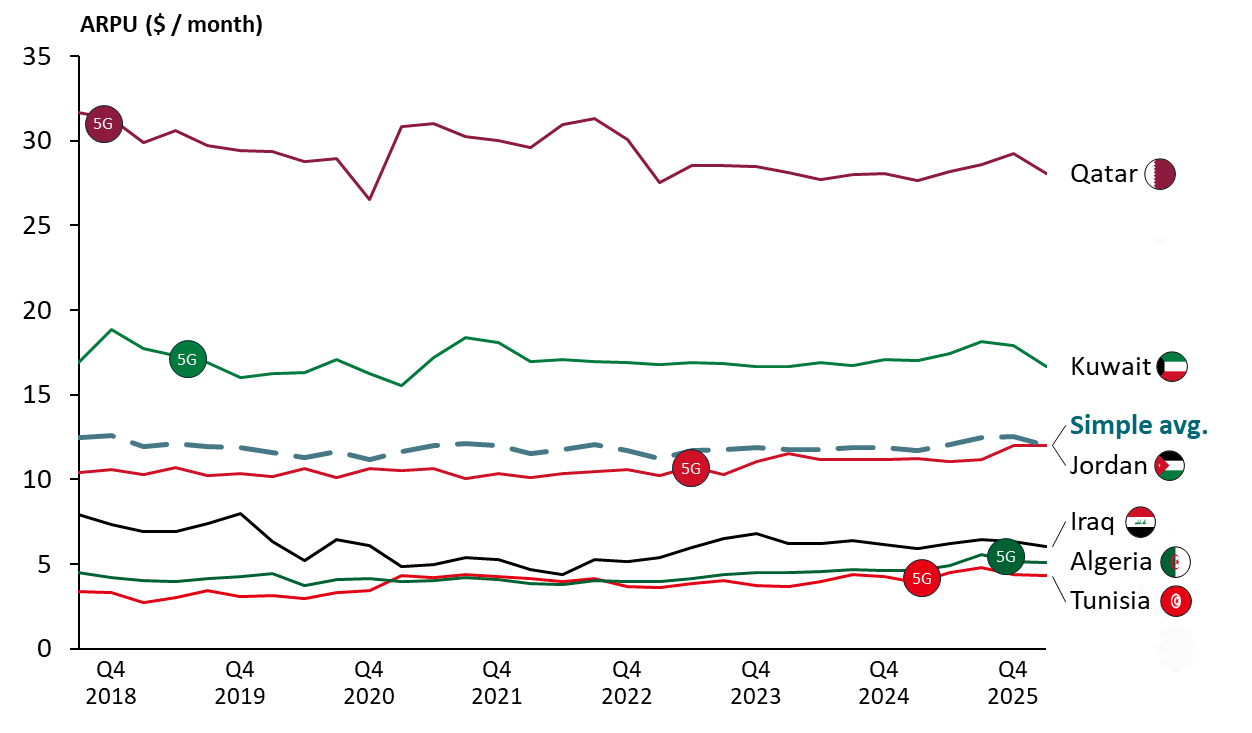
Over the last decade the mobile industry has been suffering from stagnating or even slightly declining ARPUs (Average Revenue per User). This is also the case of MENA, including markets that are on TASC’s carve-out roadmap. While revenues per customer remain flat, consumption of mobile traffic is still growing strong as new technologies such as 5G are being introduced, triggering an entirely new investment cycle that is not translating into a direct increase in fees charged to customers.
In this context, keeping long-term healthy operating margins has become a pressing point for the mobile industry. Through infrastructure sharing, TowerCos are able to provide MNOs with double-digit savings on the Total Cost of Ownership (TCO) of the passive infrastructure, supporting the industry in facilitating these investment cycles through a more efficient allocation of resources and increasing the annual roll-out scope while keeping the expansion and modernization budget under control.
Mobile ARPU on current and future TASC Towers markets and launch dates of 5G services
ARPU as reported by MNOs; 5G still not commercially available in Iraq as of Jun 2026
Operational benefits
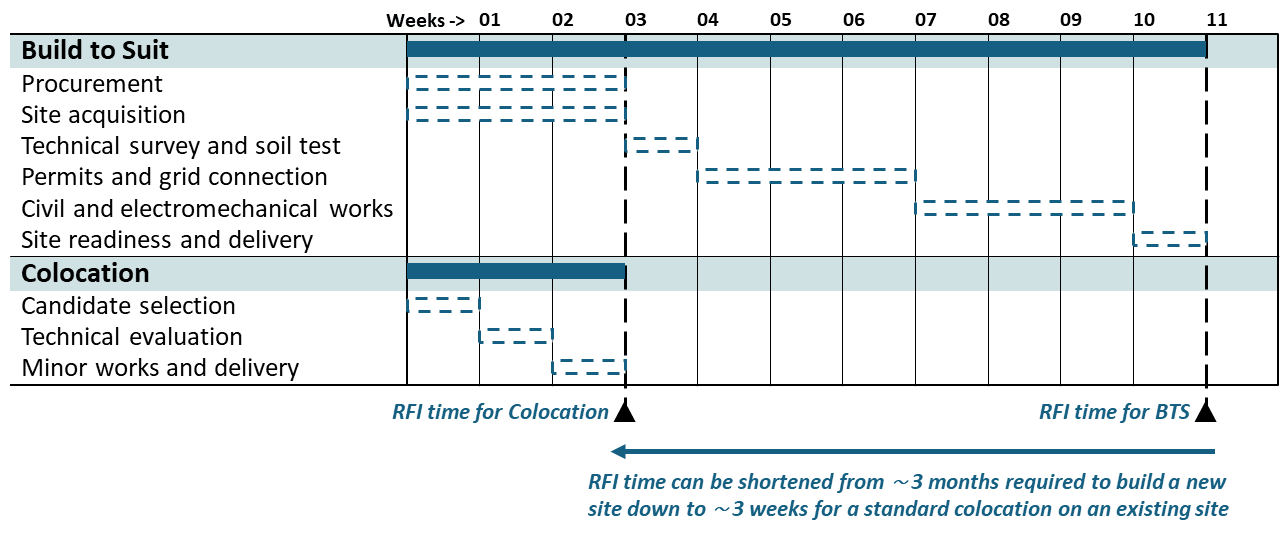
Colocating on existing infrastructure also means MNOs can be more flexible about their annual roll-out planning. Building sites is a lengthy and resource-intensive process that requires upfront preparation including procurement, site acquisition and technical survey while securing multiple permits before tower construction can even begin. TowerCo sites are already built and capable of hosting a second Tenant with minor upgrade works, potentially reducing the Ready for Installation (RFI) time from the standard 3 months for a BTS down to 3 weeks for a Colocation. This offers an unbeatable Time to Market for the MNOs to rapidly address coverage and capacity gaps to maintain network performance levels and service quality.
Beyond the accelerated initial deployment, TowerCos operate under Service Level Agreements supported by Remote Monitoring Systems that enhance portfolio management and drive higher network uptime.
Build to Suit and Colocation planning activities and weeks of work required
Timelines are indicative and subject to local market regulations, particularly when additional permits and approvals are required
Environmental benefits
Power grid reliability varies significantly across MENA and in some countries grid alone is not sufficient for uninterrupted network services. This situation translates on a portion of the portfolio running on diesel generators, either as a back-up or as primary source of power. A site running full-time on diesel generators (off-grid) can consume up to 2,000 litres of fuel a month with heavy recurring costs for fuel consumption and generator maintenance.
Of all the benefits Colocation unlocks for the Tenants, energy and fuel economy is one where being greener not only protects the environment but actually reduces operating expenses with the second Tenant fundamentally changing the energy consumption profile of the site:
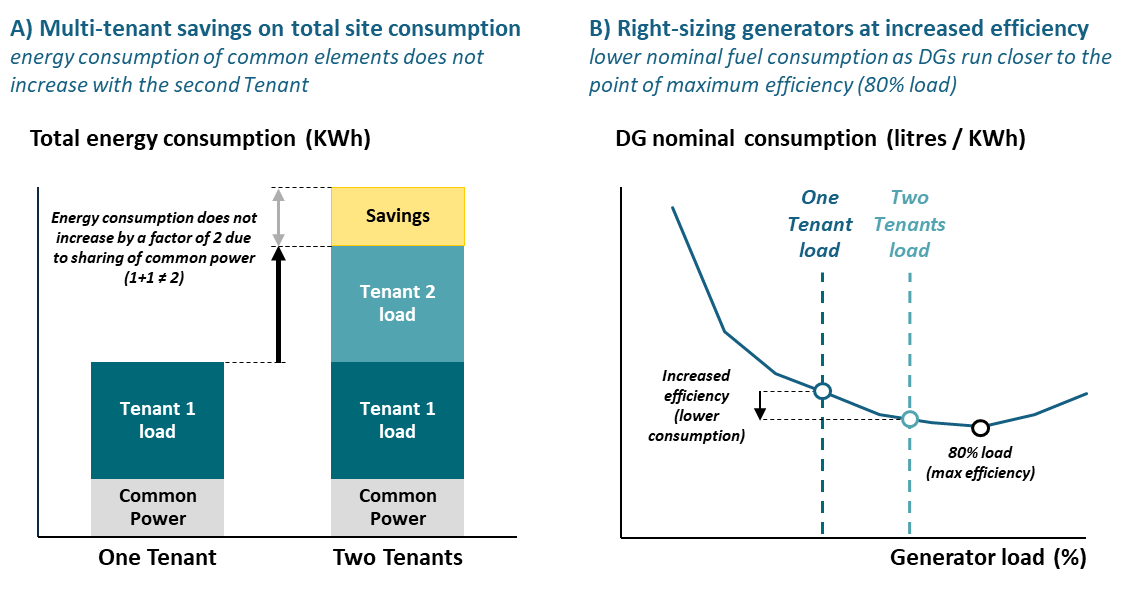
- Part of the energy consumed on the site is powering common elements such as cooling, lighting and other auxiliaries and since those elements are shared, consumption does not increase with the second Tenant. Common consumption gets allocated across Tenants, avoiding duplicity and unlocking utility savings.
- Diesel generators operate more efficiently the closer they run to their maximum efficiency load (about 80% capacity). With a single Tenant, traditional 20KVA generators operate at a lower load that the efficiency “sweet spot”; with the second Tenant the TowerCo has the opportunity to right-size the generator, optimizing for an overall lower nominal consumption closer to the maximum efficiency.
Energy and fuel efficiency unlocked through site-sharing and multi-tenancy
Illustrative energy consumption profiles.
In summary, Colocation provides significant advantages to MNOs vs traditional build of regular single-tenant sites. With the increased adoption of the TowerCo model in MENA, at TASC Towers we are well positioned to support our partners and clients in navigating current market challenges, unlocking the site sharing benefits of the TowerCo model and creating a win-win situation for all industry stakeholders remaining truthful to our principles of Connect, Empower and Optimize.
VP Commercial
Andres Flores